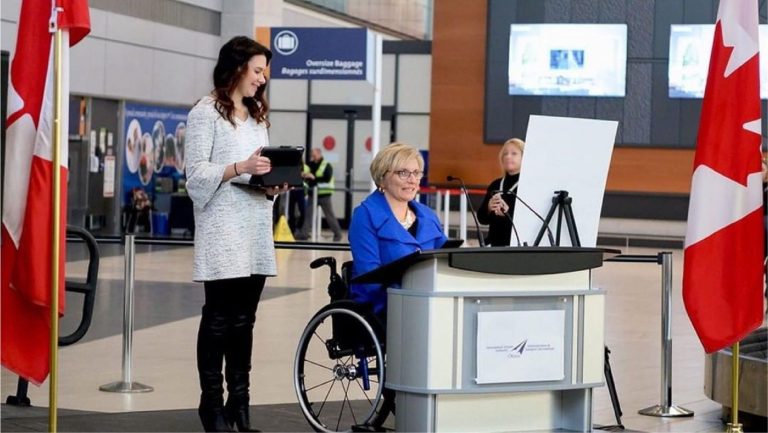
Accessibility isn’t a “nice to have” in public-facing spaces; it’s a core requirement. For federal departments, municipalities, hospitals, schools, and other public service organizations, the lectern on your stage or in your council chamber is more than furniture. It’s a public-access point. If a speaker using a mobility aid cannot comfortably and safely present, your stage setup creates a barrier.
That’s why accessible lecterns are increasingly becoming the standard across government and public institutions. In Canada, accessibility expectations are shaped by both federal accessibility legislation (Accessible Canada Act / ACA) and provincial frameworks such as AODA in Ontario (and related standards and best practices used across public facilities). The result is simple: your lectern should support every speaker, without exception.
What Is an Accessible Lectern?
An accessible lectern is designed so that people of different heights and abilities, including wheelchair users, can speak comfortably and safely. In practice, accessibility comes down to two things:
- A clear, barrier-free approach to the stage/podium area
- A lectern design that accommodates reach, posture, and device access
Accessible lecterns commonly feature height adjustability, stable work surfaces, and thoughtful integration of microphones, lighting, and cable management so speakers don’t need to stretch, lean, or reposition equipment to be heard and seen.
The Accessibility Checklist: What Makes a Lectern “Accessible”?
When public sector teams evaluate an ACA/AODA-compliant lectern, these are the most important design requirements to look for:
1) Height Adjustability (Non-Negotiable for Many Spaces)
A height-adjustable lectern allows comfortable use for:
- Seated speakers (wheelchair users)
- Standing speakers of different heights
- Multiple presenters in the same session
Motorized height adjustment is especially valuable in council chambers and high-visibility venues because it reduces setup time and prevents awkward transitions.
2) Clear Knee/Leg Space and Comfortable Reach
A truly accessible lectern must allow:
- Adequate clearance for a seated user to approach
- Controls and surfaces within easy reach
- A stable top surface that doesn’t force leaning forward
This is often missed when organizations buy standard lecterns and attempt to “modify later.”
3) Barrier-Free Stage/Podium Access
Accessibility isn’t only the lectern, it’s also the path to it. Public guidance for accessible events consistently highlights that stages and speaking areas must be accessible for people with limited mobility.
4) Accessible Controls and Integrated AV
Modern lecterns often include lighting, microphones, and input connections. For accessibility, those components must be:
- Easy to reach and operate
- Simple to adjust without assistance
- Positioned logically (no “hidden switches” or awkward ports)
Accessibility Standards Canada’s draft built environment model standard includes podium/stage considerations such as accessible access, clear floor area, controls, and illumination, exactly the kinds of requirements that show up in real-world public environments.
5) Stable, Safe, and Designed for Frequent Use
Public service lecterns see constant use. Accessibility also means:
- A stable base (no wobble)
- Durable finishes and edges
- Clean cable routing (reduces trip hazards)
- Professional setup that works day after day
Why Federal & Public Service Organizations Specifically Need ACA/AODA-Compliant Lecterns
1) Compliance and Risk Reduction
The Accessible Canada Act (ACA) aims to identify, remove, and prevent barriers in federal jurisdiction, including the built environment. For federally regulated entities and public-facing government spaces, eliminating stage barriers is part of the broader expectation of accessibility planning and procurement.
In Ontario, the Accessibility for Ontarians with Disabilities Act (AODA) has shaped accessibility planning expectations for many public sector organizations and vendors, influencing event planning and facilities standards (including stages and speaking areas).
2) Public Trust and Inclusive Service Delivery
Public service organizations are held to a higher standard because they serve everyone. An accessible lectern sends a clear message: every speaker is welcome and supported. In high-visibility settings (council chambers, public consultations, announcements), accessibility is part of institutional credibility.
3) Procurement Requirements Are Shifting Toward Accessibility by Default
Under the ACA framework, accessibility also connects to procurement practices for goods and facilities. Public sector buyers increasingly require products that support inclusive use cases and reduce the need for retrofits later.
Accessibility Without Compromise: Stage-Ready Design That Still Looks Professional
A common concern is that accessibility will limit design options. It shouldn’t.
At Podium Pros, accessible lecterns are built to be:
- Stage-ready and beautifully crafted
- Fully assembled and ready to use
- Designed with custom accessories and branding options (logo panels, sign holders, integrated mic/AV features)
For public service venues, this matters: the lectern must be inclusive and represent the organization professionally in person, on livestream, and in press photography.
Make Your Stage Accessible to Every Speaker
If your lectern setup is used for public meetings, council sessions, conferences, or institutional events, accessibility should be built in, not added later.
Explore Accessible Lecterns by Podium Pros or speak with our team about a solution that supports ACA/AODA-aligned accessibility, professional presentation, and long-term durability.